Friday, September 27, 2013

Day site visit to Islamic Art Museum Malaysia

- All happy faces after experiencing the marvelous collection of Islamic masterpieces

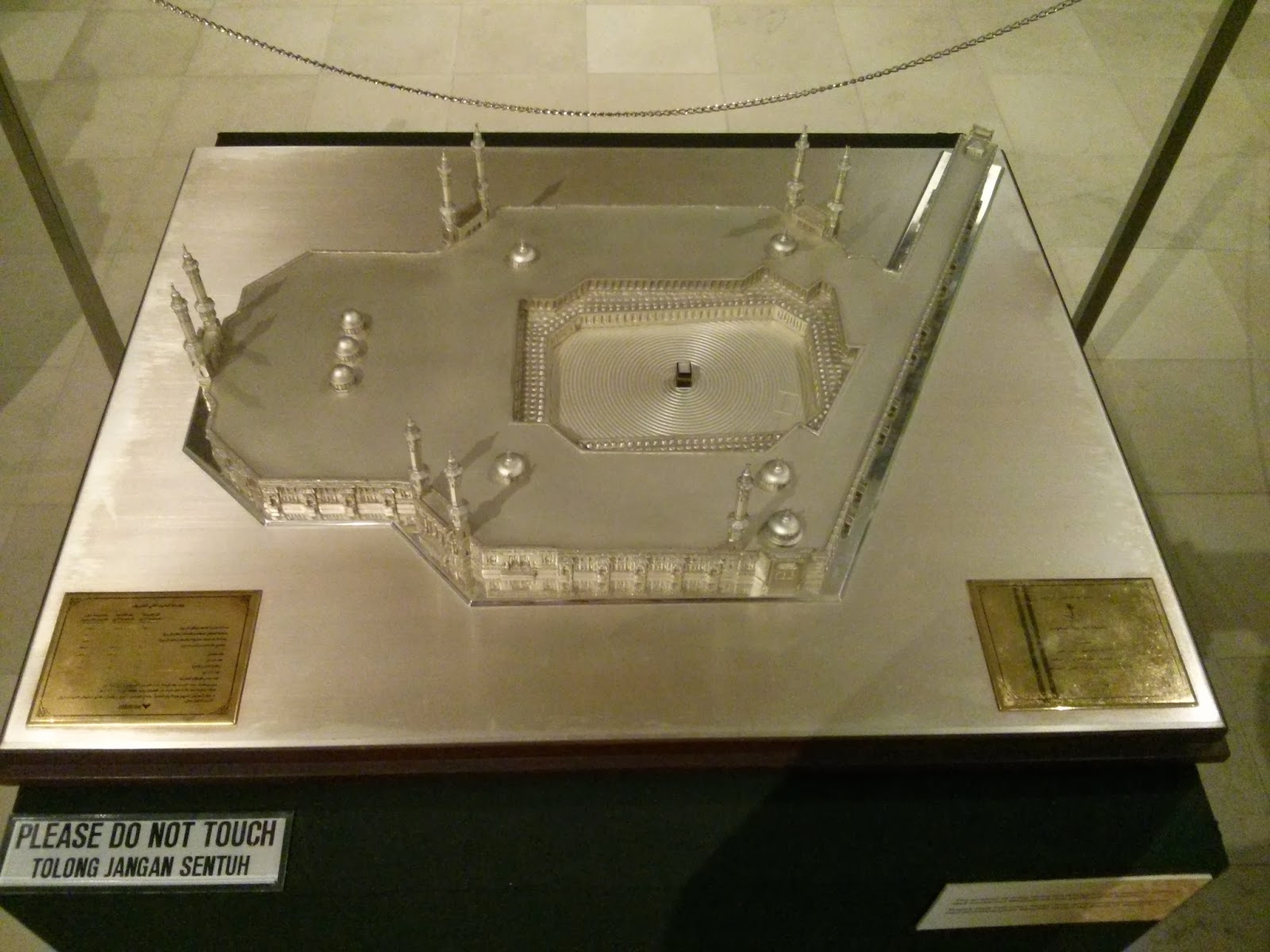
- Beautifully crafted scaled model of the Mecca 

- Closed up view of the scaled model of the Mecca

Friday, September 13, 2013

The 7 Principles of Islamic Architecture ~ Part 2

The 7 Principles of Islamic Architecture

1. Architecture as Tawhid: Unity & Uniquity
    of Allah)

2. Architecture of Ihtiram: Respect

3. Architecture with Ikhlas: Sincerity

4. Architecture as Pursuit of ‘Ilm:
    Knowledge


5. Architecture for Iqtisad: Balance

6. Architecture of Haya’: Modesty

7. Architecture as Dikr: Remembrance


Architecture with Ikhlas: Sincerity

There are two modes of expression for Muslims to submit to Allah

  • outward physical actions of the body when in prayer
  • inward action of the heart
The architectural features that shows sincerity are the ones that has


  • abstract rigid architecture of a garden w. untrammeled nature and flowing water
  • integration of Mathematics: embodiment of geometric proportion, harmony & balance
  • domestic living halls (garden courtyard)
    - Karatay Madrasa

    -Alhambra Palace in Granada


  • Architecture as Pursuit of 'Ilm: Knowledge

    As it is mandatory for all people of Muslim faith to have a great knowledge of the Islamic religion as said by the Prophet himself.

    In Islamic architecture, the ornamentation and carvings acquires a precise finish from the skilled carve artist that gives out the geometric laws. The mosque not only known as a scared holy building but also an education sanctuary for the people of Muslim faith where they trade knowledge to one another.

    Even though the tradition of geometrical system, technology and calligraphy has been improved over the years, more modern Islamic structures are still being implemented today to restore it's true meanings.

    - Islamic calligraphy found in Taj Mahal


    Friday, September 6, 2013

    The 7 Principles of Islamic Architecture ~ Part 1


    The 7 Principles of Islamic Architecture

    1. Architecture as Tawhid: Unity & Uniquity
        of Allah)

    2. Architecture of Ihtiram: Respect

    3. Architecture with Ikhlas: Sincerity

    4. Architecture as Pursuit of ‘Ilm:
        Knowledge

    5. Architecture for Iqtisad: Balance

    6. Architecture of Haya’: Modesty


    7. Architecture as Dikr: Remembrance


    Architecture as Tawhid: Unity & Uniquity of Allah

    The notion of tawhid is the most important cornerstone in the conceptual framework for Islamic architecture. Tawhid means asserting the unity or oneness of Allah. Tawhid is the Islamic concept of monotheism. The word tawhid is derived from the words wahid and ahad which mean “one”, “unique” and “peerless”.

    Based on the concept of tawhid, Muslims believe that God cannot be held equal in any way or degree to any other being or concept. Maintaining that there is no God except Allah and that there is nothing comparable to Him constitutes the essence of tawhid and the essence of Islam.

    Notion of Tawhid: al Quran - haqiqa (formless essence) revelation/enlightenment which is the nature of space, forms, order, orients and a  place for man to be with the presence of Divine Unity

    Main architecture of Allah Unity & Uniquity is Ka’bah, the direction towards which Muslims face their five daily prayers.

    - the Kaaba ( الكعبة‎‎ al-Kaʿbah)

    Architecture of Ihtiram: Respect

    The act of showing respect to Allah and by doing this, Muslims must observe the 5 pillars of Islam which is:  
    • shahada, 
    • salat (prayer), 
    • zakat (alms), 
    • fasting  
    • hajj
    Observing these 5 pillars encourages respect towards Allah and purify one self that can improve conduct and build up inner and outer self fulfillment.

    Prophet Muhammad shows perfect example of propriety and praiseworthy characteristics

    The holy book Al-Quran teaches/guides us to respect, the virtues and attitudes of good manners.

    The architecture of Ihtiram are shown through symbols that shows harmony and purity of geometry of the Ka'abah and clearly can be found in all Islamic architecture around the world.


    • Each face of the cube corresponding to the primary directions
    • Whilst the four corners point towards the cardinal points of the universe
    • Ka`bah - the underlying point of convergence between essential cosmic principles and mosque architecture in the world.


    Friday, August 30, 2013

    An Introduction to Islamic Architecture

    Beginnings of Islam : The Revelation

    Prophet Muhammad SAW/Pbuh

    • Born in Mecca around 570 AD

    • Prophet Muhammad comes from the tribe of Qureish which was from the 40 clans lived in Mecca with varying status and wealth.

    • Known as Al Amin & Respected for his skill in trade and married a wealthy widow, Khadijah.

    • Meditate in the hillside outside the city, during this solitary vigils that he first heard God’s message.


    - Prophet Muhammad SAW/Pbuh


    - The map showing Mecca

    • The first revelation in the cave at Mt. Hira. The Holy Prophet (SAW) is commissioned as the Messenger of ALLAH (AWJ/SWT).

    • Prophet Muhammad- migrate fr Mecca to Madina - known as “Hijrah” - indicates the beginning of the Islamic Calendar.

    • New religion known as Islam – fundamental beliefs – embodied: 5 Pillars of Islam & 6 Pillars of Faith


    The Quran - The miracle of the Prophet 

    • The Qur’an is a continuation of the previous divine Messages that Allah sent to people via His Messengers throughout history. 


    • It is the grand finale of those divine Messages. 


    • To the polytheistic Arabs of Mecca, nevertheless, Islam was a new religion. 

    • The Qur’an consists of 114 chapters, and each chapter consists of a number of verses. 

    • The Qur’an contains 6236 verses in total.


    - The Holy Book Qur’an

    Pillars of Islam

    The most important Muslim practices are the Five Pillars of Islam.

    The Five Pillars of Islam are the five obligations that every Muslim must satisfy in order to live a good and responsible life according to Islam.

    The Five Pillars consist of:

    • Shahadah: sincerely reciting the Muslim profession of faith
    • Salat: performing ritual prayers in the proper way five times each day
    • Zakat: paying an alms (or charity) tax to benefit the poor and the needy
    • Sawm: fasting during the month of Ramadan
    • Hajj: pilgrimage to Mecca

    Why are they important?

    Carrying out these obligations provides the framework of a Muslim's life, and weaves their everyday activities and their beliefs into a single cloth of religious devotion.
    No matter how sincerely a person may believe, Islam regards it as pointless to live life without putting that faith into action and practice.
    Carrying out the Five Pillars demonstrates that the Muslim is putting their faith first, and not just trying to fit it in around their secular lives.
    - The Five Pillars of Islam


    References